
Krishnamurti Schools in India: Official 6 Compared
Compare KFI’s six official schools by location, boarding model, classes and board—from Rishi Valley and Rajghat to Pathashaala and Sahyadri.
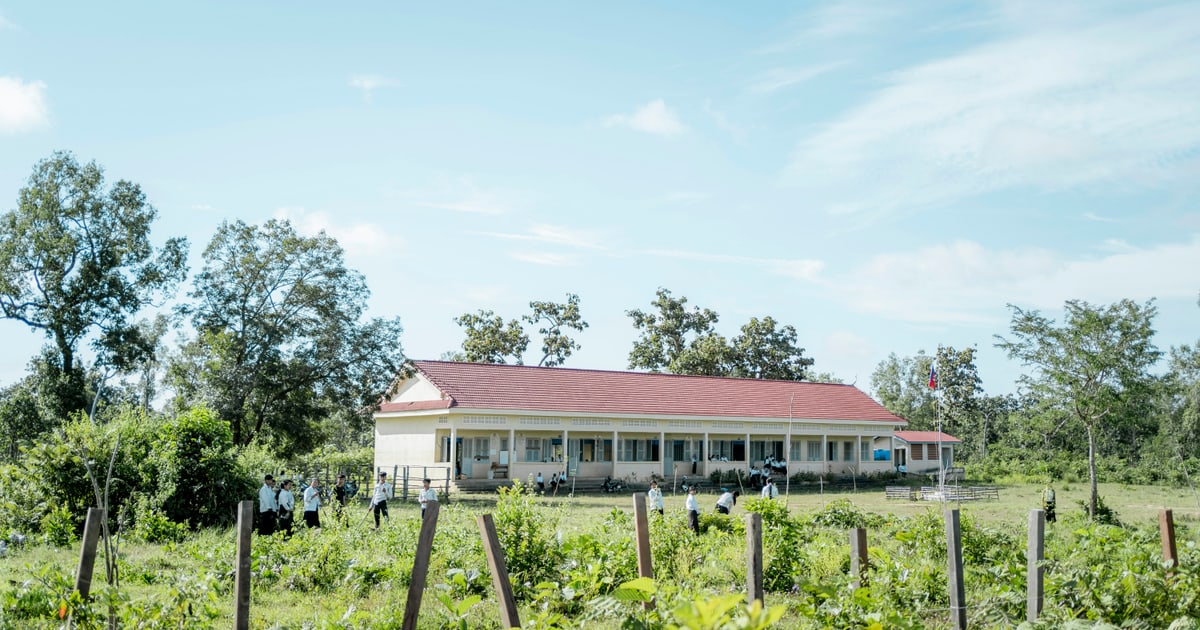
The six schools managed by Krishnamurti Foundation India (KFI) are Rishi Valley School, Rajghat Besant School, The Valley School, The School KFI, Sahyadri School and Pathashaala. Their locations, boarding models, class ranges and exam boards differ.
Centre for Learning (CFL) and Shibumi are independent; neither appears on KFI’s current managed-six list. Families may still consider them on their own terms, but they should not be presented as KFI schools. For a wider starting point, see our guide to alternative schools in India.
KFI describes Krishnamurti’s educational concern as bringing about “a human being with a radically new consciousness.” That is the Foundation’s stated aspiration, not evidence of a guaranteed student outcome.
How do the six official KFI schools compare?
| School | Location | Classes | Published residence model | Class 10 and 12 route |
|---|---|---|---|---|
| Rishi Valley School | Madanapalle, Andhra Pradesh | 4–12 | Residential | ICSE at 10; ISC at 12 |
| Rajghat Besant School | Varanasi, Uttar Pradesh | III–XII | Primarily residential; day pupils in III–V, then boarding | CBSE |
| The Valley School | Bengaluru, Karnataka | 1–12 | Classes 11–12 offer full or week boarding; confirm the model for 1–10 directly | IGCSE at 10; ISC at 12 |
| The School KFI | Thazhambur, Chennai, Tamil Nadu | LKG–12 | Day-boarding | ICSE at 10; ISC at 12 |
| Sahyadri School | Pune district, Maharashtra | 4–12 | Residential | ICSE at 10; ISC at 12 |
| Pathashaala | Chengalpattu district, Tamil Nadu | V–XII | Fully residential | IGCSE at 10; AS/A Levels in 11–12; NIOS supported where suitable |
The table is a shortlist tool, not a ranking. A child needing a Chennai day programme is choosing from a different practical set than a family seeking a fully residential senior-school route. If the board pathway is your first filter, use our NIOS, IGCSE and Indian-board comparison alongside each school’s current admissions material.
What do the six KFI schools actually cost?
Half of them will not tell you. We checked each school’s own current fee document in August 2026, and the split is the first genuinely useful thing to know: three publish a full schedule, three publish nothing beyond an application or admission fee. No comparative table of these figures existed anywhere we could find, so this one is assembled from the schools’ own published documents and is dated accordingly.
| School | Published annual fee | What it covers | Source year |
|---|---|---|---|
| Rishi Valley | ₹8,75,000 | Tuition, hostel, food, laundry; Classes 11–12 add ₹25,000 | 2025-26 |
| Sahyadri | ₹7,40,000 | Boarding and tuition, new resident Indian students; Class 11 is ₹7,70,000 | 2026-27 |
| Rajghat Besant | ₹5,44,000 | Classes III–V boarder; rises to ₹6,86,000 by Class XI. Day scholar ₹2,57,000 | 2026-27 |
| The Valley School | — | No current fee schedule published | — |
| The School KFI | — | Only a ₹500 registration fee is disclosed | — |
| Pathashaala | — | Only a one-time ₹10,000 admission fee plus an unstated caution deposit | 2025-26 |
Two things to hold on to. The headline number is not the first-year number: Rishi Valley adds a refundable caution deposit equal to a full year’s fee, Sahyadri asks for 60% of the annual fee as a deposit plus a ₹50,000 personal account, and Rajghat’s first-year total for a new Class III boarder is about ₹7,03,000 once the admission fee and deposit are counted. And where a school publishes nothing, that is worth weighing as information in itself — you cannot compare what you cannot see, and you will be committing to a boarding place before you know its price.
Four of the six are residential, and four of those admit from Class 3, 4 or 5 — so for many families the real question is not which KFI school but whether a child of eight or nine should board at all. We looked at what the research actually says about boarding age, including a 2024 meta-analysis of 49 studies. Full profiles with verified fees, admission age bands, contact details and independent ratings: Rishi Valley, Sahyadri, The School KFI, Rajghat Besant, Pathashaala and The Valley School.
Rishi Valley is a residential ICSE/ISC school for Classes 4–12
Rishi Valley School is in the Madanapalle area of Andhra Pradesh and publishes a residential programme from Class 4 through Class 12. Its senior-school route prepares students for ICSE at the end of Class 10 and ISC at the end of Class 12.
That structure suits families specifically seeking a long residential pathway with an Indian CISCE board route. It is a less obvious fit when day schooling is non-negotiable. Read the current admissions page, senior-school subject information and contact page together; the programme and available entry points matter more than the broad KFI label.
Rajghat Besant combines CBSE with a primarily residential model
Rajghat Besant School is in Varanasi and serves Classes III–XII under CBSE. Its published structure is primarily residential: day attendance is available in Classes III–V, with boarding thereafter.
Rajghat is therefore the official-six option to examine first when CBSE is essential, but the residence transition is a real family decision. Confirm the class for which applications are open, the current boarding requirement and the child’s readiness directly from the school rather than assuming a day place continues into later classes.
The Valley School moves from IGCSE to a residential ISC programme
The Valley School in Bengaluru publishes an IGCSE route through Class 10 and an ISC programme for Classes 11–12. The ISC programme offers full boarding and week boarding. This guide does not label the residence model for Classes 1–10 because the official pages used here do not support one simple description across those years.
The change from Cambridge IGCSE to ISC deserves attention: compare subject availability and assessment expectations rather than treating “international” or “KFI” as a complete curriculum description. Families researching this school can also use Skoolpin’s The Valley School profile and then verify every current admissions detail on the school’s own site.
The School KFI is Chennai’s LKG–12 day-boarding option
The School KFI is at Thazhambur in Chennai. It describes itself as a day-boarding school, covers LKG through Class 12, and prepares students for ICSE in Class 10 and ISC in Class 12.
This is the official-six choice with the broadest published age span and no residential-school commitment. Day-boarding still means a substantial school day, so families should check transport, meal arrangements, timings and the admissions notice for the particular class. Current openings vary by entry year and vacancies; do not infer availability from the class span alone.
Sahyadri is a Pune-district residential ICSE/ISC school
Sahyadri School is a residential school in Pune district with a nine-year programme covering Classes 4–12. Its academic pages state that students prepare for ICSE at Class 10 and ISC at Class 12.
The practical comparison with Rishi Valley is not a claim that one is better: both publish residential Class 4–12 ICSE/ISC routes, while geography, campus life, subject choices and the current admissions process may decide the fit. Families should examine the school and residential environment, not just the board label.
Pathashaala is fully residential with Cambridge and NIOS routes
Pathashaala is in Chengalpattu district, Tamil Nadu, and publishes a fully residential programme for Classes V–XII. Classes IX–X follow Cambridge IGCSE; Classes XI–XII offer Cambridge AS and A Levels. The school also states that it supports NIOS examinations where that route suits a learner.
This combination offers more than one certification route, but “more options” does not mean every route fits every learner or university plan. Ask which subjects and combinations are currently available and how a proposed pathway affects later eligibility. For orientation on the open-school route, read what NIOS means for homeschoolers; for consequential admissions decisions, verify current requirements with the relevant board and institution.
What are the honest trade-offs of choosing a KFI school?
- Residential fit can outweigh philosophy. Rishi Valley, Sahyadri and Pathashaala are residential, while Rajghat becomes boarding after the early day classes. A child’s readiness for living away from home deserves its own decision.
- The board routes are not interchangeable. CBSE, ICSE/ISC, IGCSE/ISC and IGCSE/AS/A Levels differ in subject structure and transition points.
- A shared KFI connection does not make the six schools operationally identical. Class spans, residence models, location and senior-school routes differ substantially.
- Published class coverage is not proof that a seat is open in every class. Entry points and vacancies must be checked for the intended year.
- The fee table above covers the three schools that publish a schedule — Rishi Valley, Sahyadri and Rajghat Besant. The Valley School, The School KFI and Pathashaala publish nothing comparable, so ask those three for tuition, boarding, deposits and other compulsory charges in writing before you commit.
- An educational philosophy is not an outcomes guarantee. Judge the specific school’s daily practices, child support and programme against your child’s needs.
A useful school visit asks concrete questions rather than testing whether staff can repeat a philosophy. Our alternative-school vetting checklist covers governance, teacher continuity, assessment, child support and exit pathways.
How should a family apply to a KFI school?
- Filter by non-negotiables first: location, day or residential model, intended entry class, and Class 10/12 board route.
- Open the current admissions page for the specific school. Do not rely on an old directory listing or assume all six follow one calendar.
- Check whether the intended class is an advertised entry point or vacancy-only class, and note every published deadline and required document.
- Ask for the current subject list, residence terms and complete fee schedule before treating the option as financially or academically viable.
- Visit or speak with the school about daily routines, student support, assessment and how the published philosophy appears in ordinary classroom and residential life.
- Follow that school’s process without coaching a child to perform a supposedly “KFI” personality. Pathashaala explicitly says prospective students need not be specially prepared; other schools publish their own procedures.
- Keep a board and transfer fallback. If plans change, know what records the school supplies and how the child would move to another curriculum.
Frequently asked questions about KFI schools
- Which are the six official KFI schools in India?
- KFI’s current managed-school list names Rishi Valley School, Rajghat Besant School, The Valley School, The School KFI, Sahyadri School and Pathashaala.
- Are CFL and Shibumi official KFI schools?
- No. Centre for Learning (CFL) and Shibumi are independent and do not appear on KFI’s current list of six managed schools. That distinction describes governance, not educational quality.
- Which KFI schools are residential?
- Rishi Valley, Sahyadri and Pathashaala publish residential models; Pathashaala describes itself as fully residential. Rajghat is primarily residential, with day pupils in Classes III–V before boarding. The Valley School publishes full and week boarding for Classes 11–12. The School KFI is day-boarding.
- Which boards do KFI schools follow?
- Rajghat Besant follows CBSE. Rishi Valley, The School KFI and Sahyadri use ICSE for Class 10 and ISC for Class 12. The Valley School uses IGCSE for Class 10 and ISC for Class 12. Pathashaala uses IGCSE followed by AS/A Levels and supports NIOS where suitable.
- How much do KFI schools cost?
- Partly. Three of the six publish a current schedule and those are compared above: Rishi Valley at ₹8,75,000, Sahyadri at ₹7,40,000 and Rajghat Besant from ₹5,44,000, all checked in August 2026. The Valley School, The School KFI and Pathashaala publish no annual figure, so no like-for-like comparison across all six is possible. Request a written schedule from those three, including tuition, boarding, deposits and compulsory extras.
- Which KFI school is best?
- There is no evidence-based single ranking. Start with day versus residential fit, location, entry class and board route; then compare the specific school’s current programme, support and admissions process with your child’s needs.
- At what age do KFI schools admit, and is there an LKG intake?
- Entry points differ by school, as the comparison table above shows. The School KFI in Chennai does run an LKG–12 span; The Valley School starts at Class 1, Rajghat Besant at Class III, and Rishi Valley and Sahyadri at Class 4. The Valley School’s current Class I window admits children born between 1 August 2020 and 1 August 2021, and parent attendance at the interaction is mandatory. See KFI admission age and the parent interview.
Schools mentioned in this guide
- Sahyadri School ₹7,40,000 / yr · ICSE · ISC (CISCE)
- The Valley School Fees on enquiry · Cambridge IGCSE · ISC
- Rishi Valley School ₹8,75,000 / yr · ICSE · ISC (CISCE)
- Centre for Learning (CFL) Fees on enquiry · Cambridge IGCSE · A Level
- The School KFI Fees on enquiry · ICSE · ISC (CISCE)
- Shibumi ≈ ₹3,20,000 / yr · Cambridge IGCSE · A Level (as private candidates)
Ready to compare schools?
Browse online & alternate schools in India and the UAE on Skoolpin.
Find schools