
Multiple Intelligences in Indian Alternative Schools: Real Practice or Marketing Spin?
Many Indian schools claim to use Howard Gardner’s Multiple Intelligences theory. Here is how to tell if it is real practice or just a marketing buzzword.
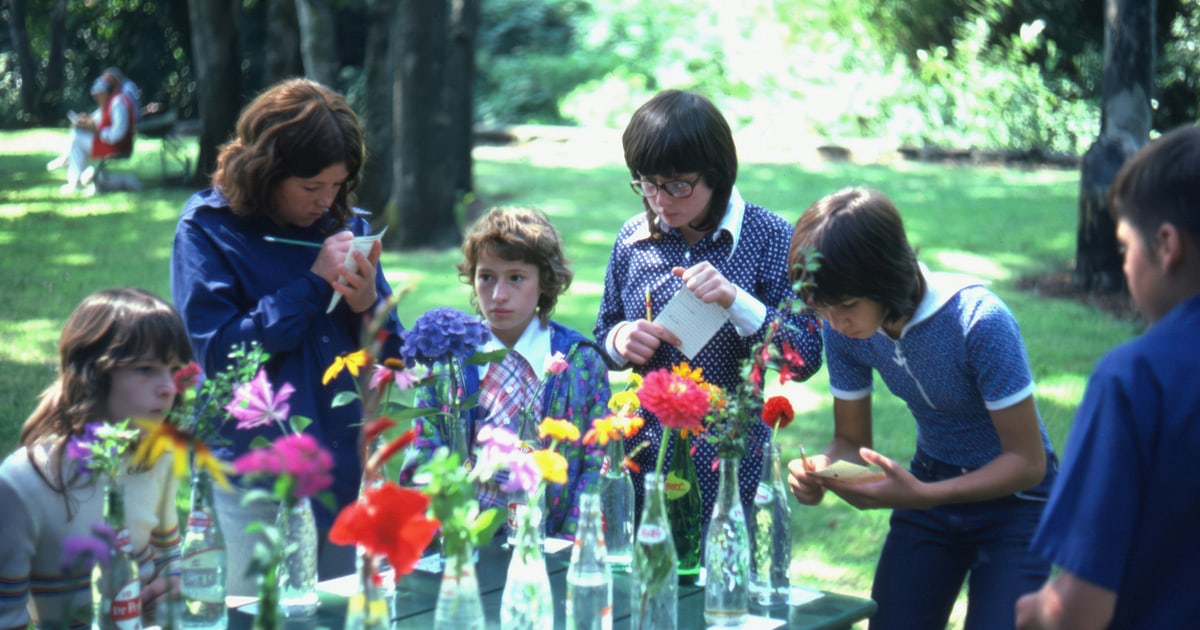
If you’ve toured a premium preschool or alternative school in India recently, you’ve almost certainly heard the phrase "Multiple Intelligences" (MI). It is usually accompanied by a colorful pie chart claiming that the school caters to the visual, musical, kinesthetic, and interpersonal genius within every child. It sounds fantastic. But is it changing how Indian children learn, or is it just a clever way to sell admissions?
Developed by Dr. Howard Gardner at Harvard in 1983, the theory argues that traditional IQ testing is too limited. Instead of just logical-mathematical and linguistic intelligence (the kind schools usually test), humans possess at least eight different intelligences, including spatial, bodily-kinesthetic, musical, interpersonal, intrapersonal, and naturalist. In theory, a school using this framework should teach and assess students across all these modalities.
The Marketing Myth vs. Classroom Reality
The problem in India is that "Multiple Intelligences" has become an easy label to slap onto a standard curriculum. Adding a weekly 40-minute music class and a physical education period does not mean a school is implementing an MI framework.
| The MI Claim | What it looks like in Marketing | What it looks like in Real Practice |
|---|---|---|
| "We cater to all learning styles" | A brightly colored brochure listing the 8 intelligences. | A history lesson taught not just by reading, but by acting out a historical event (kinesthetic), analyzing music from the era (musical), and mapping the geography (spatial). |
| "We assess holistically" | A standard report card that adds a "co-curricular" grade for sports and art. | Assessments allow students to demonstrate understanding in varied ways—e.g., presenting a project via a model, a video, or an essay, rather than just a written exam. |
| "Personalized learning paths" | Putting kids who struggle with math into a "remedial" worksheet group. | Identifying that a child has high spatial intelligence and teaching them fractions using visual manipulatives or architecture concepts. |
How to Vet a School’s "MI" Claim
When a school in Delhi or Chennai pitches their MI approach, don’t just nod at the pie chart. Ask these specific questions:
- "How does MI change your math or science lessons?" If MI is only applied to extracurriculars, it’s not a core philosophy.
- "How are teachers trained in this framework?" True implementation requires significant, ongoing teacher training to design multifaceted lesson plans. Ask about their professional development.
- "How do you handle board exams?" The brutal reality of the Indian system is that the CBSE or ICSE board exam at the end of Class 10 is heavily skewed toward linguistic and logical-mathematical intelligence. A good school will be honest about this tension and explain how they transition students toward standardized testing requirements.
A genuine Multiple Intelligences approach can transform a child’s confidence, especially if they are not naturally "book smart" in the traditional sense. It aligns well with approaches like project-based learning in alternative schools. However, it’s crucial to look past the branding. For more on evaluating schools, read our guide on alternative schools in India.
- Is a Multiple Intelligences school better than a traditional school?
- It depends on the execution. A school genuinely integrating MI into its teaching methods can offer a richer, more engaging education. However, a traditional school with excellent teachers might still outperform a school that uses MI merely as a marketing gimmick.
- Can a child with high bodily-kinesthetic intelligence succeed in the Indian board exams?
- Yes, but they may need support. Indian board exams (CBSE/ICSE) primarily test linguistic and logical-mathematical skills. A good MI school will use a child's kinesthetic strengths to help them grasp concepts, but eventually, the child must learn to translate that understanding into the written formats required by the boards.
- Do all alternative schools use the Multiple Intelligences theory?
- No. While many alternative schools align with the broad spirit of valuing diverse talents, some follow specific philosophies (like Waldorf or Montessori) which have their own foundational theories of child development, distinct from Gardner's MI framework.
Ready to compare schools?
Browse online & alternate schools in India and the UAE on Skoolpin.
Find schools