
Homeschooling Multiple Children at Different Ages in India: 4 Real Schedules That Work
A 6-year-old wants play. A 12-year-old wants exam prep. Four real scheduling models Indian homeschooling families use — with the research behind each.
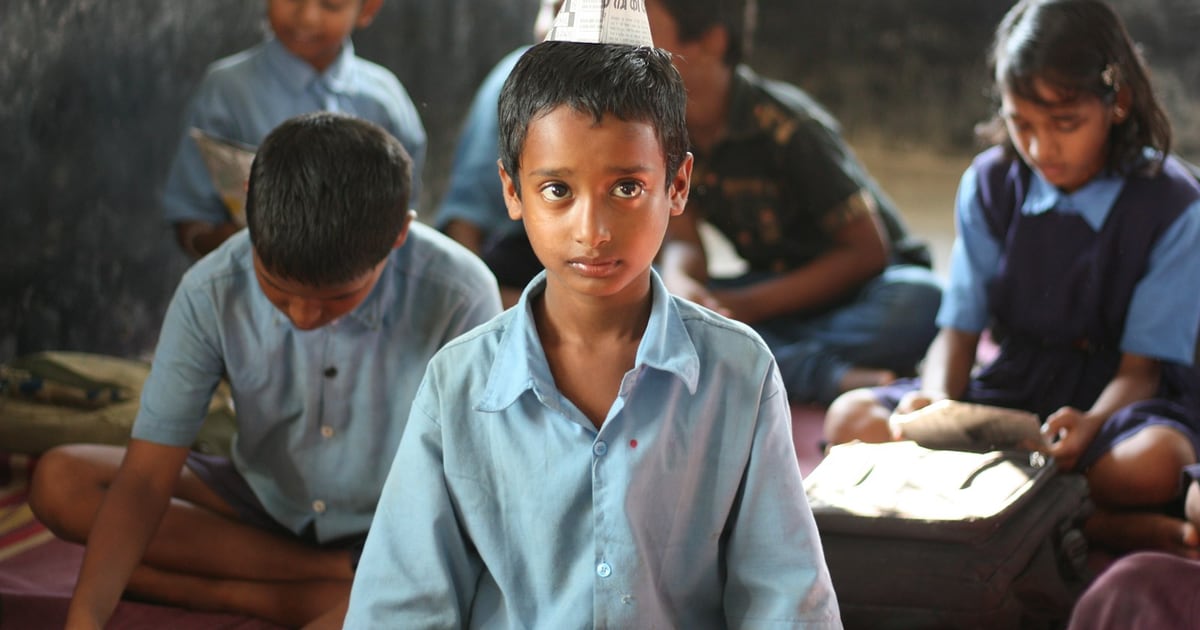
It is 9:15 on a Tuesday in Pune. Your six-year-old has decided that today is the day for a baking-soda volcano and cannot understand why this cannot happen immediately. Your twelve-year-old is two weeks behind on a NIOS science practical and needs quiet, focused help — the opposite of a fizzing volcano. You are one adult. This is the real problem of homeschooling more than one child: not the curriculum, but the clock. This guide lays out four scheduling models that Indian families actually run, what each one is good and bad at, and the honest state of the evidence behind them.
This isn't legal advice; NIOS rules and age cutoffs change — verify current requirements for your child at nios.ac.in / sdmis.nios.ac.in and confirm your state's position before you plan around any specific age or eligibility rule mentioned below.
The myth: you have to teach them all together
The first instinct of most parents is to run a mini-classroom: everyone at the table, same subject, same time. It rarely survives contact with a real age gap. A six-year-old and a twelve-year-old are not doing 'the same lesson at different levels' — they are doing genuinely different work with different attention spans. The good news is that the thing many parents worry about — mixing ages — is not the weakness they fear. Research on mixed-age settings is broadly encouraging: in a lottery-based study of Montessori preschools in the United States (Lillard et al., 2017), children showed gains in academic and social measures. But note the two limits before you lean on it: that study looked at structured Montessori classrooms, not homeschools, and it was run in the US. It tells you mixed-age grouping can work; it does not tell you a specific home schedule will.
Being honest about the evidence matters here. No India-specific, peer-reviewed research on multi-age homeschool scheduling currently exists. The rigorous studies cited in this article — the Montessori mixed-age study, a theory-of-mind study (Frontiers in Psychology, 2021), and a sibling-and-cognition study from China — all come from the US and China and are applied to Indian homeschooling by reasonable extension, not as a direct finding. Treat them as informed guidance for how to structure your days, not as proof that any one model will work for your children.
Four scheduling models that actually work
There is no single 'homeschool timetable.' The four models below are the ones that recur across Indian families and align with what the research does and doesn't support. Most families end up blending two of them.
| Model | How it works | Best fit | Watch out for |
|---|---|---|---|
| Morning basket (combined-subject) | One shared block a day — read-aloud, discussion, art, a project, current affairs — done together across ages, with each child engaging at their own level. | Younger age gaps; subjects that scale (stories, nature, history, values). A calm way to start the day together. | Does not work for maths or exam prep, where levels diverge sharply. Older child can coast; younger can drown if you pitch it wrong. |
| Block / staggered scheduling | Each child gets focused solo blocks (worksheets, reading, independent tasks) while you rotate to one child at a time. | Wide age gaps and academic subjects. The workhorse model once children can work alone for 20–40 minutes. | Needs an independent-work culture you have to build first. Falls apart if both children need you at the same minute. |
| Older sibling as a bounded tutor | The older child runs SHORT, structured tutoring with the younger — a fixed drill, flashcards, reading practice — not open-ended "go teach your sister." | Reinforcing already-learned material; giving you a 15-minute window. Can genuinely help the older child consolidate too. | Only the structured version helps. Keep it short, defined, and voluntary — it is not free childcare, and must never replace your teaching time. |
| NIOS-track separation | The exam-bound older child is pulled onto a separate, protected track (NIOS Secondary/Senior Secondary prep) with its own quiet hours, while younger children run a looser schedule. | Once one child is within a year or two of board-level exams and needs deep, uninterrupted focus. | Can isolate the older child and overload the parent covering both worlds. Verify NIOS eligibility and timelines yourself (see the note below). |
The 'older sibling as tutor' row deserves a caveat, because it is the one families most often get wrong. Peer- and cross-age tutoring has real research support — meta-analyses summarised by Reading Rockets find measurable gains for both the tutee and the tutor. But the benefit sits almost entirely in short, structured sessions with a clear task: a spelling drill, timed maths facts, guided reading of a known text. Open-ended arrangements — 'you're older, just teach him' — do not show the same benefit and tend to breed resentment. Use the older child to reinforce, in tight defined bursts; never to deliver new material or to substitute for you.
Why involve siblings at all? Beyond the tutoring evidence, mixed-age interaction is plausibly good for younger children's social cognition. A 2021 theory-of-mind study (Frontiers in Psychology) and a separate study on siblings and cognitive development from China both associate mixed-age and sibling interaction with stronger perspective-taking — though, again, both are non-Indian and correlational, so read them as encouragement to let your children learn alongside each other, not as a guarantee.
In practice, many experienced Indian homeschoolers reject the idea of a single uniform timetable entirely. In a June 2021 Homegrown.co.in profile of Indian homeschooling families, parent Dola Dasgupta describes structuring each of her children's days around their own age-appropriate pace rather than forcing one shared schedule on everyone — effectively living the 'block / NIOS-track separation' blend above. It is a useful reality check: the goal is not one perfect timetable for the household, but a workable rhythm per child that you can actually staff as one or two adults.
Where NIOS fits — and why you must reconfirm the age rules
Scheduling for an older child usually means scheduling around NIOS, the government's National Institute of Open Schooling. For homeschooling families, NIOS offers two relevant bands. Open Basic Education (OBE) has Levels A, B and C and is generally described as covering the roughly 6–14 age range — the 'grey area' years, giving a government-recognised paper trail before board level. Above that sit Secondary (Class 10 equivalent) and Senior Secondary (Class 12 equivalent), each with its own minimum-age and eligibility rules.
Be careful with the exact numbers. Sources disagree on the precise age cutoffs for OBE levels and for the Secondary/Senior Secondary minimum ages, and the official NIOS pages returned errors and inconsistencies while we were researching this article. So treat any specific cutoff you read — here or elsewhere — as provisional. Do not build your children's multi-year schedule around a specific cutoff year until you have reconfirmed it for your child, in the current cycle, at nios.ac.in and sdmis.nios.ac.in. Our companion NIOS guide walks through the levels in more depth, but the same 'verify current rules' warning applies there too.
A sample staggered morning (6-year-old + 12-year-old)
This is one worked example of the block/staggered model — not a prescription. It assumes one available parent and a twelve-year-old who can work independently in short stretches. Adjust the clock to your household.
| Time | 6-year-old | 12-year-old | Parent is with… |
|---|---|---|---|
| 8:30–9:00 | Morning basket — read-aloud & talk (together) | Morning basket — read-aloud & talk (together) | Both (shared block) |
| 9:00–9:40 | Guided phonics / early maths | Independent: NIOS science reading + notes | The 6-year-old |
| 9:40–10:20 | Independent: drawing, puzzles, free play | Guided: maths problem-solving / practical prep | The 12-year-old |
| 10:20–10:40 | Snack & movement break (together) | Snack & movement break (together) | Both |
| 10:40–11:00 | Short reinforced reading with older sibling | Bounded tutor role: 15-min reading drill with the 6-year-old | Free window — reset, plan, or 1:1 catch-up |
| 11:00–11:45 | Project / hands-on (the volcano!) | Independent: writing or a second NIOS subject | The 6-year-old, then floating |
Notice how the 15-minute sibling-tutoring slot is deliberately short, structured, and buys the parent a genuine reset — exactly the way the tutoring evidence says it works. The moment it drifts into 'just keep her busy for an hour,' it stops being educational and starts being resentment.
The takeaway
You will not find one timetable that fits a six-year-old and a twelve-year-old, and you should stop trying. Start together where it's genuinely shared (a morning basket), separate hard where levels diverge (block scheduling for maths and exam work), use older siblings only in short structured bursts, and protect the exam-bound child's focus once NIOS timelines get real. Blend two models, expect to re-tune every few months, and treat every age and eligibility rule as something to reconfirm — not something to assume.
New to all this? Start with our step-by-step guide to starting homeschooling in India. Unsure where the law stands before you commit? See is homeschooling legal in India. And for the board pathway most of these schedules build toward, read what NIOS is and how it works.
- Can I really teach a 6-year-old and a 12-year-old at the same time?
- Not for everything. Share the subjects that scale across ages — stories, nature, history, discussion — in a single 'morning basket' block, and separate the subjects that don't, especially maths and exam prep, using staggered solo blocks. Research on mixed-age Montessori classrooms in the US (Lillard et al., 2017) is encouraging about grouping ages together, but note it studied classrooms, not homeschools, so use it as direction, not proof.
- Is it fair to make my older child teach the younger one?
- In short, structured doses, yes — and it can help both children. Meta-analyses summarised by Reading Rockets show cross-age tutoring benefits the tutor as well as the tutee, but the benefit is concentrated in brief, defined tasks (a reading drill, timed maths facts). Open-ended "go teach your brother" does not show the same benefit and breeds resentment. Keep it short, specific and voluntary, and never let it replace your own teaching time.
- At what age should my child start on the NIOS track?
- There is no single right answer, and — importantly — the exact NIOS age cutoffs are something you must verify yourself. Sources disagree and the official NIOS pages were inconsistent during our research. Broadly, Open Basic Education covers roughly the 6–14 band and Secondary/Senior Secondary sit above it, but do not plan around a specific cutoff year until you reconfirm it for your child, in the current cycle, at nios.ac.in and sdmis.nios.ac.in. This isn't legal or admissions advice.
- Do I need a fixed timetable at all?
- No. Many experienced Indian homeschoolers deliberately avoid one. In a June 2021 Homegrown.co.in profile, parent Dola Dasgupta describes shaping each child's day around their own pace rather than a single household schedule. A fixed timetable helps when a child is doing structured exam prep; a looser, interest-led rhythm can work better for younger children. Most families run a mix — some anchored blocks, plenty of flex.
Ready to compare schools?
Browse online & alternate schools in India and the UAE on Skoolpin.
Find schools