How to Start Homeschooling in India: A Step-by-Step Guide for First-Year Parents
No registration needed, no permission to seek. Exactly how Indian families start homeschooling — legal basics, NIOS, curriculum, community, and first-year costs.
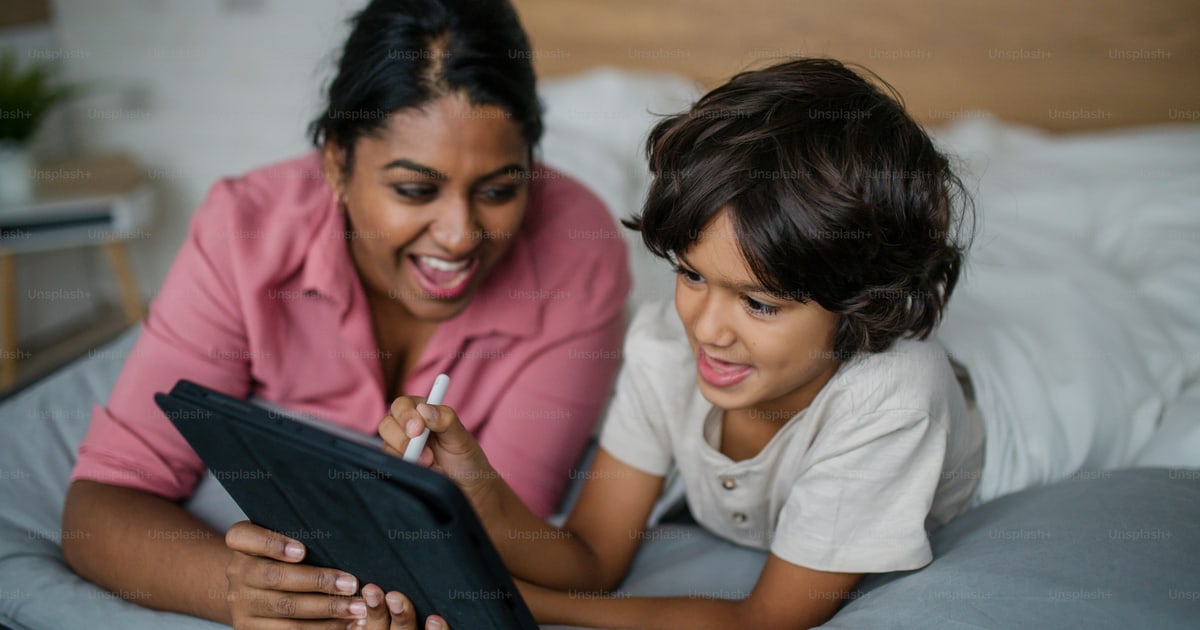
A parent in Chennai pulled her 10-year-old out of a competitive private school in October. By December, her daughter had taught herself Tamil script from a workbook she found on her own. None of this was planned, and none of it required a licence. The first thing to know about starting homeschooling in India is that there is no form to fill. Also, consider the difference between homeschooling vs home tutoring. The second thing is that the hard part is not the bureaucracy — it is figuring out what actually works for your family.
This guide covers the practical steps: legal position, NIOS registration, curriculum approaches, records, community, and realistic first-year costs. It is not legal advice; verify your state's current rules before acting.
Step 1 — Understand the legal position (5 minutes)
The RTE Act 2009 places the obligation to provide education on the government, not on parents. The Ministry of Human Resource Development confirmed this explicitly in a 2011 counter-affidavit in the Delhi High Court: "the compulsion therefore is not on the children but on that Government" and "parents who voluntarily opt for systems of home schooling may continue to do so." No Indian family has been prosecuted for homeschooling under the RTE Act. No national registration or notification is required to begin. Verify your state's current position — as of June 2026, no state has introduced a mandatory homeschooling notification requirement, but state rules can change.
Step 2 — Decide your end goal before choosing method
Before selecting any curriculum or approach, answer one question: what certificate route are you planning? The answer shapes everything else in year one.
| Approach | What it looks like | Main tools | Certification plan | Best suited for |
|---|---|---|---|---|
| NIOS-aligned structured | Cover NIOS Class 10 subjects progressively from age 10–13; register at 14 | NIOS textbooks (free at nios.ac.in), NCERT (ncert.nic.in), tutors for hard subjects | NIOS Class 10 at 14, Class 12 at 16–17 | Families who want a clear academic roadmap from the start |
| Interest-led / hybrid | Follow child's interests primarily; introduce NIOS alignment at age 13 | Khan Academy, library books, projects, co-ops; NIOS syllabus from age 13 | NIOS Class 10 at 14–15 | Families who want flexibility without losing sight of certification |
| Unschooling (fully child-led) | No imposed curriculum; child drives all learning; NIOS prep begins at 13 | Life, community, resources the child asks for; NIOS syllabus from 13 | NIOS Class 10 at 14–15 (or later) | Families comfortable with ambiguity; child shows strong self-direction |
| IGCSE-prep | Work backward from IGCSE subject syllabuses; register via British Council India at ~13–14 | Cambridge IGCSE syllabuses (free at cambridgeinternational.org), tutors | Cambridge IGCSE at 14–16 | Families wanting an international pathway; budget for per-subject centre fees |
Step 3 — Handle the school exit cleanly
Request a Transfer Certificate (TC) from your child's school when withdrawing. Keep it — you may need it for NIOS registration, re-enrolment in a conventional school later, or some college admissions processes. Schools are required to issue TCs; if there is resistance, document the request in writing.
Step 4 — Expect a deschooling period and plan for it
If your child has been in a conventional school, expect a transition period — commonly called "deschooling" in homeschooling communities — before they engage naturally with home-based learning. Children who have been told when to sit, when to speak, when to think, and when to stop for years often need weeks or months of unstructured time before curiosity re-emerges. This is discussed in John Holt's work and widely documented in Indian homeschooling community experience. It is not failure; it is transition. Budget 1–3 months, more for children who were in high-pressure environments.
During this period: prioritise activities, nature, reading for pleasure, creative projects, social time with other kids. Resist the urge to fill every hour. The families who struggle most in year one are those who start "school at home" on day one — before any decompression has happened.
Step 5 — Sort your resources and tools
- Homeschool resources by grade: a checked Classes 1–12 shelf covering official NIOS and NCERT material, reading, practice, experiments and low-bandwidth options. Start there before assembling the rest.
- NCERT textbooks: freely available at ncert.nic.in — excellent for maths and science; NIOS curricula cover similar ground.
- Khan Academy (khanacademy.org): free, self-paced, excellent for maths and science, trusted in Indian homeschooling communities.
- Local library membership: state libraries in most cities are free; the National Digital Library of India (ndl.gov.in) has extensive free resources.
- Tutors for specific subjects: optional, but most families use one or two for subjects that need structured instruction (typically maths, or a language the parent is not comfortable teaching). In metros, expect ₹500–2,000 per hour for experienced tutors.
- Art, craft and maker supplies: budget ₹3,000–8,000 per year depending on age and interests.
Step 6 — Build community deliberately and early
The single most common advice from experienced Indian homeschooling families: find your community before you need it, not after you are already overwhelmed. Homeschooling is socially sustainable with other families; it is isolating without them.
- Swashikshan (swashikshan.org): India's homeschooling association, with city chapters in Bengaluru, Mumbai, Pune, Delhi and Hyderabad. Regular events, support networks, and an annual gathering.
- WithoutSchool.org/in: maintains a directory of India homeschooling groups by city.
- City-specific Facebook and WhatsApp groups exist for most metros — search "[city] homeschooling India" and you will find them.
- Learning co-ops: many communities organise weekly shared learning sessions where children work on projects together. Some charge ₹500–2,000 per month; others are free.
Step 7 — Keep records from day one
NIOS Class 10 does not require school transcripts — a self-certificate of adequate knowledge or a Class 8 pass certificate is sufficient. But college applications, overseas university applications, and re-entry into conventional school may all ask for evidence of learning. Keep a simple learning log: what was studied, when, what resources were used, and any notable projects or achievements. A notebook, a Notion document, or a Google Doc is enough — you do not need specialist software.
Step 8 — Register with NIOS when ready (age 14+)
NIOS (National Institute of Open Schooling) is the standard certification route for Indian home learners. Registration is online at sdmis.nios.ac.in. Minimum age for Class 10: 14 years as of 31 July of the relevant year. You will need: a Class 8 pass certificate from a recognised board, or a self-signed certificate stating adequate knowledge if your child has not attended a recognised school. Select a minimum of 5 subjects including English. The admission fee is approximately ₹1,890 (female, general category) to ₹2,200 (male, general) for 5 subjects — verify the current fee schedule at sdmis.nios.ac.in before applying, as fees are revised periodically. Exam fees are approximately ₹300 per theory subject and ₹150 per practical. Exams run twice yearly (typically April–May and October–November); check current dates on nios.ac.in.
What year one actually costs — a realistic breakdown
- NIOS registration (at age 14): approximately ₹2,000–2,600 for 5 subjects admission + ₹300 per subject exam fee + ₹150 per practical. Not a year-one cost if your child is younger.
- Curriculum materials: NIOS textbooks and NCERT textbooks are free online; physical copies ₹500–1,500 per year for printing or purchase.
- Khan Academy and similar digital platforms: free.
- Tutors (optional): ₹500–2,000 per hour in metros; ₹250–800 outside metros. Most families use 2–4 hours per week for 1–2 subjects = ₹5,000–20,000 per month in urban areas.
- Learning co-op: ₹0–2,000 per month depending on the group.
- Books, craft supplies, field trips, activities: ₹5,000–15,000 per year depending on age and approach.
- Total for a typical year (excluding NIOS registration): ₹10,000–50,000, varying enormously by tutoring use and location.
What year one typically looks like, honestly
Months 1–3: school exit, deschooling, exploring interests without pressure. Month 4–6: rhythm and resources take shape; community found. Month 7–12: genuine learning in chosen directions; portfolio building; decision on certification path finalised. Most families describe year one as more difficult than year two — more second-guessing, more explaining to relatives, more uncertainty. Most also describe year two as significantly better. The families who stop usually stop in months 2–4, during the deschooling phase, when the absence of school structure feels like something going wrong. It is not. It is the transition.
Frequently asked questions
- Do I need to be a teacher?
- No. Your role is facilitator, resource-provider, and co-learner — not subject-matter expert in every domain. Tutors, online platforms, co-ops, and mentors fill the gaps. What matters most is your engagement and availability, not your qualifications.
- Can I start mid-academic year?
- Yes. There is no academic-year start date in homeschooling. Most families find January or April (after standard school terms) the most convenient, but any month works.
- What if my child wants to go back to school?
- Keep your Transfer Certificate and learning records. Contact the target school to understand re-entry requirements. NIOS Class 8 or 10 pass is widely accepted for re-enrolment.
- What does homeschooling cost compared to a private school?
- A well-resourced homeschooling family spends roughly ₹50,000–2,00,000 per year (curriculum, tutors, activities). A mid-range private school in a metro costs ₹60,000–3,00,000 per year in fees alone, before uniforms, books, activities and transport. Homeschooling is typically cheaper at equivalent resource levels — but the cost in parental time is real and not measurable in rupees.
Ready to compare schools?
Browse online & alternate schools in India and the UAE on Skoolpin.
Find schools