CBSE vs State Board for Private Candidates in India (2026)
Understand the eligibility rules, syllabus differences, and exam flexibility when choosing between CBSE Patrachar and State Open Boards as a private candidate.
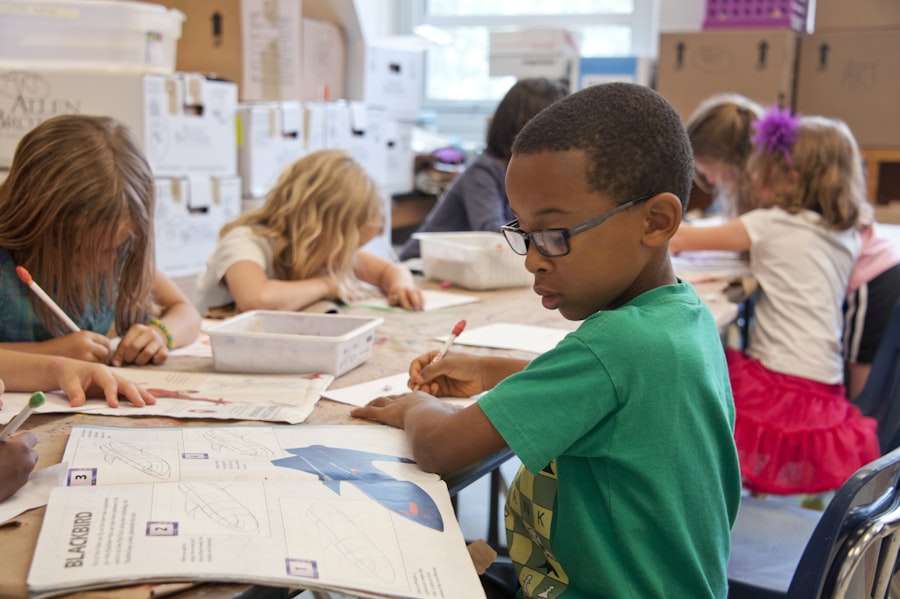
CBSE allows private candidates only under strict conditions (like repeating a year or female candidates in Delhi), whereas State Open Boards are designed specifically for independent learners, offering wider eligibility and flexible subject choices.
When a student leaves the mainstream school system—whether to homeschool, pursue sports, or due to health reasons—they eventually need a Class 10 or 12 certificate. While many opt for the national NIOS board, others look at CBSE as a private candidate or their respective State Open Board. The rules for these two pathways are vastly different.
CBSE Private Candidate: A Restricted Pathway
Many parents mistakenly believe anyone can just "register for CBSE privately." This is entirely false. CBSE is fundamentally a school-based board. It heavily restricts who can appear as a private candidate.
Generally, you can only appear privately for CBSE Class 10 or 12 if you failed the previous year, if you are upgrading your marks, or if you are a female/disabled candidate residing in Delhi (under CBSE Patrachar). A standard homeschooled child from Bangalore or Mumbai cannot simply sign up for CBSE board exams.
CBSE is designed to evaluate students who have gone through its specific school-based continuous assessment. It is not an open board. Parents who pull their kids out of school in Class 8 expecting them to write CBSE Class 10 privately are in for a rude shock. — Dr. Rakesh Sharma, Educational Consultant (The Hindu, 2023)
State Open Boards: The Accessible Alternative
Almost every Indian state has its own State Open School (SOS), like the Maharashtra State Board of Open Schooling (MSBOS) or the Karnataka State Open School (KSOS). These boards are modeled after NIOS and are explicitly designed for out-of-school learners.
| Feature | CBSE (Private Candidate) | State Open Boards (e.g. MSBOS) |
|---|---|---|
| Eligibility | Highly restricted (failures, Delhi residents) | Open to anyone meeting age criteria |
| Syllabus | Standard CBSE (NCERT) | State board syllabus (often easier) |
| Medium of Exam | English/Hindi | English, Hindi, and Regional Languages |
| Flexibility | Rigid, must take 5 subjects at once | Often allows accumulating credits over years |
State boards are particularly useful if your child is fluent in the regional language or if you want a syllabus that is generally considered less grueling than CBSE, freeing up time for extracurriculars or sports.
University Recognition and Entrance Exams
A major fear is whether State Open Boards are recognised for college admissions or competitive exams. Legally, certificates from recognised State Open Boards carry the exact same weight as CBSE for university admissions across India. They are fully valid for JEE, NEET, and CUET eligibility.
However, if you are aiming for universities abroad, international admissions offices are very familiar with CBSE and NIOS, but might require additional translation or equivalence checks for a lesser-known State Open Board certificate.
Which Should You Choose?
For 95% of homeschoolers, CBSE Private is simply not an option due to eligibility rules. Your real choice is usually between the national NIOS board and your State Open Board. Choose the State board if the regional language is a strength or if you prefer a localized syllabus. Choose NIOS if you want a nationally recognized curriculum with highly flexible on-demand exams.
| Scenario | Recommended Board | Reason |
|---|---|---|
| Failed CBSE Class 12, wants to retry | CBSE Private Candidate | Directly eligible to clear the compartment/improve |
| Homeschooler in Karnataka | NIOS or KSOS | Not eligible for CBSE Private |
| Wants to take exams in Marathi | Maharashtra Open Board | State boards offer regional languages |
- Can a private candidate take science practicals in CBSE?
- For CBSE private candidates who are repeating, marks from previous practicals are often carried forward. If applying fresh (e.g., Delhi female candidates), the board assigns a center for practicals.
- Is the State Open Board easier than CBSE?
- Generally, yes. The depth of the syllabus in State boards is often considered less intense than the NCERT syllabus used by CBSE, though this varies slightly by state.
- Can I switch from CBSE regular to a State Open Board for Class 12?
- Yes, if you pass Class 10 from CBSE, you can register for Class 12 through a State Open Board or NIOS, provided you meet the required age and gap-year criteria.
Ready to compare schools?
Browse online & alternate schools in India and the UAE on Skoolpin.
Find schools