Grandparent-Led Homeschooling in India: Is It Legal, and What Actually Changes?
When Ajji or Nana runs the homeschool day, is it even legal — and what actually changes for your child's education?
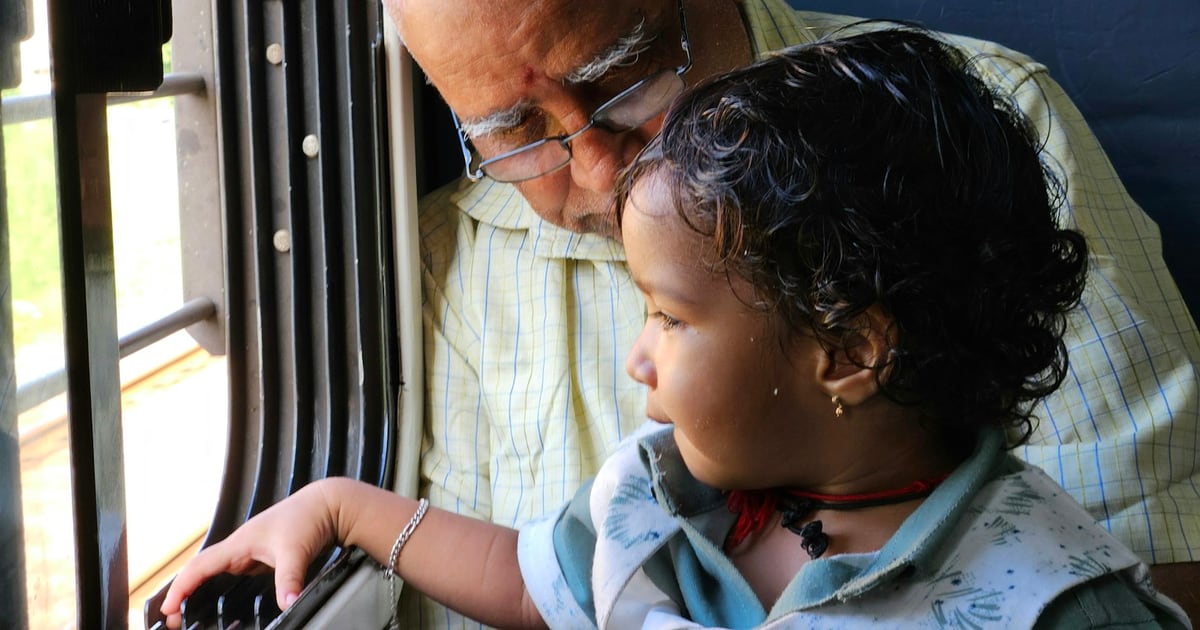
Picture a fairly common Bengaluru arrangement. Both parents leave for work by 8:30. The person who actually runs the homeschool day — the reading, the maths, the museum trips, the endless 'but why is the sky blue' questions — is Ajji, the child's grandmother. In other households it is a Nana, a Thatha, or an uncle or aunt who lives with the family. On paper the parents are 'homeschooling.' In practice, a grandparent or relative is the teacher. This is far more common in India than the homeschooling-blog stereotype of a stay-at-home mother suggests, and it raises two questions those blogs rarely answer honestly: is it even legal for someone who isn't the parent to run a child's education, and what genuinely changes for the child when the day-to-day teacher is a generation — or two — removed?
Is It Legal When the Teacher Isn't the Parent?
First, the necessary line, up front and not buried near the end: this is general information, not legal advice. Homeschooling itself sits in a genuine legal grey area in India, and the rules that touch compulsory education vary by state and by board. Verify your current state and board rules — and, where certification is involved, the current NIOS rules — before you make any decision. Nothing below substitutes for that check. Our fuller walk-through of the law lives in is homeschooling legal in India.
With that said, the specific 'but it's not the parent teaching' worry is usually the wrong thing to be anxious about. The Right of Children to Free and Compulsory Education Act, 2009 (the RTE Act) frames the duty to educate a child around the parent or guardian — and its definitions clause (Section 2) reads the word 'guardian' broadly.
"'guardian', in relation to a child, means a person having the care and custody of that child and includes a natural guardian or guardian appointed or declared by a court or a statute." — definitions clause, Section 2, Right of Children to Free and Compulsory Education Act, 2009
A co-resident grandmother who has care and custody of a child day to day is not some legal outsider to that child's upbringing; the law's own language is built around care and custody, not a narrow 'only the biological parent counts' rule. So the framing 'a grandparent can't legally be the teacher' has no clear basis. The genuinely unsettled question is a level up from that — whether the RTE's compulsory-education mandate for ages 6 to 14 permits home education at all — and that is unresolved for everyone, parent-taught or not.
How unresolved? The clearest illustration is the Shreya Sahai matter before the Delhi High Court (2011–2012), reported in contemporary news coverage of the period. The government's affidavit initially took the position that the RTE Act does not bar homeschooling — that parents who choose to educate at home are not breaking the law. The government then reportedly reversed that position, calling the earlier stance incorrect. No confirmed final verdict has since settled the question either way. So the honest status is: a genuine grey area with conflicting official signals and no clean resolution — not 'clearly legal,' and not 'clearly banned.' Anyone who tells you it is definitively one or the other is overstating what the record actually shows.
What about NIOS, the National Institute of Open Schooling — the usual certification route for home learners? A reasonable worry is that registration might quietly require the parent specifically to be the teacher. Here honesty requires a flag: during our research, NIOS's official portals returned errors and we could not directly re-confirm the current rule. What we can state is the honest finding, not a settled fact — no biological-parent requirement for the person doing the teaching was found in publicly available NIOS material. NIOS registers the student; it does not, as far as we could verify, mandate who at home does the day-to-day teaching. Treat that as an unconfirmed finding and reconfirm it directly at nios.ac.in and sdmis.nios.ac.in — and with your regional NIOS centre — before you register. For how the route works overall, see what is NIOS homeschooling in India.
What Grandparents Often Do Better
Before any list of gaps, the counterweight — because a pure deficit framing would be both unfair and inaccurate. Availability and patience are not small things in a homeschool day that runs five or six hours. A grandparent who isn't racing to a 9 a.m. stand-up meeting can sit through a slow explanation twice without visible frustration, wait out a bad mood, and let a child take the long way to an answer. Retired or semi-retired relatives often bring exactly the two resources a working parent is shortest on: time and calm. Layer on lived experience, storytelling, a home language kept alive, cultural continuity, and one-to-one attention no classroom of forty can match — and the picture is not 'second best.' It is a genuinely different set of strengths, and some of them are ones the research on homeschooling keeps identifying as decisive.
Three Real Gaps — and How Families Close Them
The strengths are real; so are the gaps. The mistake families make is treating the grandparent as the sole source of subject explanation for every topic. The reframe that works: treat the grandparent as the day-to-day presence and motivator — the person who keeps the day running, notices when a child is stuck, and encourages — and pair them with current materials, recorded lessons or an occasional tutor for the actual content delivery, with the grandparent supervising and cheering rather than single-handedly teaching Class 8 physics. Read the table that way — each fix is a division of labour, not a demand that a 70-year-old master the new syllabus.
| The gap | Why it shows up | A practical fix |
|---|---|---|
| Curriculum currency | Syllabi, exam patterns and even how subjects are framed have changed since the grandparent last studied or taught — sometimes by decades. | Let the grandparent supervise and motivate; pair them with current textbooks, recorded lessons or an occasional subject tutor for content delivery. |
| Technology and app comfort | Much of today's home learning runs through apps, video platforms and online registration portals. A 2024 systematic review in Educational Gerontology (Taylor & Francis, peer-reviewed) found older adults face real, patterned barriers to adopting new digital tools — not an individual failing, a documented trend. | Have a younger family member set up devices, logins and platforms once; keep a one-page "how to" sheet by the desk; choose tools with large text and simple flows over feature-heavy ones. |
| Generational friction | Expectations about discipline, screen time and "how learning should look" differ across generations. A study in Ageing & Society (Cambridge University Press, peer-reviewed), based on 26 in-depth interviews with grandparents in South India, documents how these caregiving roles get negotiated and where tension surfaces. | Agree the ground rules — screen limits, discipline, daily rhythm — between parent and grandparent in advance and in private. Keep the child out of the referee role between two adults who disagree. |
One more thing a grandparent-run day does not solve on its own: the child's wider social world. A relative at home is company, but it is not a peer group, and the socialisation question needs its own deliberate plan — co-ops, activity classes, housing-society friends. We cover that in full in homeschooling and socialisation in India; the short version is that in a multi-generational household it is easy to assume the social side is 'handled' when it still needs designing.
The Household Backdrop: Is This Even a Real Pattern?
It helps to be clear-eyed about the demographics, because both the 'joint families are dying' and the 'India is all joint families' clichés are wrong. The most recent official household data is Census 2011 — the 2021 Census was postponed and has not been conducted, so 2011 remains the current official count, not a fresh one. It shows nuclear households as the majority, while joint and extended households, though a smaller share, still number in the tens of millions and grew in absolute terms even as their percentage share dipped. In other words: multi-generational homes are neither the default nor a relic — they are a large, stable minority, which is exactly the population from which grandparent-led homeschooling is drawn.
The care can cut both ways, and the evidence is careful about this. The Longitudinal Ageing Study in India (LASI, wave 1 — an academic, government-backed survey) has been analysed to find co-residence with grandchildren associated with modestly higher life-satisfaction odds for grandparents (around OR 1.16 in one analysis), while other research, including a SAGE Open study of 377 grandparents, maps how involvement patterns vary and where heavy caregiving loads can strain older adults. Read together, they say the same measured thing: for many grandparents this is a meaningful, satisfying role — and it can also be a real workload. Both are true. Plan for both.
The Honest Middle
Two loud versions of this story compete, and both are wrong. The alarmist version overstates the restriction — 'it must be illegal,' 'the teacher has to be the parent,' 'NIOS won't allow it.' The dismissive version overstates the decline — 'joint families are dying,' 'a grandparent's teaching is automatically lower quality.' The honest middle is less quotable but far more useful: relative-led homeschooling is legally no more fraught than any other homeschooling in India (the grey area is the same for everyone), it draws on a real and stable minority of multi-generational households, and its quality depends not on the teacher's age but on the division of labour the family designs around them. Treat the grandparent as the patient, present anchor of the day — and bring in current curriculum, recorded lessons or a tutor for the parts that have moved on since they were in a classroom — and you get the best of both: the calm and continuity a working parent can't supply, without asking one person to re-learn an entire modern syllabus.
- Is it legal for a grandparent, not the parent, to homeschool a child in India?
- There is no clear rule against it. The RTE Act, 2009 frames the duty to educate around the parent or guardian, and its definitions clause (Section 2) defines a guardian broadly as a person having the care and custody of the child. A co-resident grandmother or relative fits that. The genuinely unsettled question — unresolved for parent-taught families too — is whether the RTE's compulsory-education mandate for ages 6 to 14 permits home education at all; the Shreya Sahai matter (Delhi High Court, 2011–2012) saw the government first say the Act doesn't bar homeschooling and then reportedly reverse, with no confirmed final verdict. This is general information, not legal advice — verify your current state and board rules.
- Does NIOS require the parent specifically to be the teacher?
- No biological-parent requirement for the person teaching was found in publicly available NIOS material — NIOS registers the student, not a designated home teacher. Important caveat: NIOS's official portals returned errors during our research, so treat this as an unconfirmed finding, not a settled fact, and reconfirm directly at nios.ac.in / sdmis.nios.ac.in and with your regional NIOS centre before registering.
- What if the grandparent isn't confident with the modern syllabus or apps?
- Very common, and easily managed. Treat the grandparent as the day-to-day presence and motivator rather than the sole subject-explainer: pair them with current textbooks, recorded lessons or an occasional tutor for content, with the grandparent supervising and encouraging. For technology, have a younger family member set up devices and logins once and leave a one-page instruction sheet. A 2024 systematic review in Educational Gerontology found older adults' digital-adoption barriers are a documented, patterned trend — so this is normal to plan around, not a personal failing.
- How do we avoid conflict between parents and grandparents over how the child learns?
- Agree the ground rules — screen limits, discipline, daily rhythm — between the adults in advance and in private, and keep the child out of the referee role. Research in Ageing & Society (Cambridge University Press), based on 26 in-depth interviews with grandparents in South India, shows caregiving roles are actively negotiated and that tension is normal; naming expectations early is what prevents it from landing on the child.
The bottom line: when Ajji or Nana runs the homeschool day, the legal picture is no worse than for any Indian homeschooling family, and the educational picture can be genuinely strong — provided you build the day around what a grandparent uniquely offers (time, patience, presence) and quietly outsource what has changed since they last sat in a classroom. Just verify the current legal and NIOS position for yourself before you commit; this is a grey area, and it is one you should walk into with your eyes open.
Ready to compare schools?
Browse online & alternate schools in India and the UAE on Skoolpin.
Find schools